How to Choose Safety Cutters for Workplace Accident Prevention

For those who have never used a safety cutter before, or for those looking to further reduce workplace accidents, here are our expert recommendations for choosing safer cutting tools:
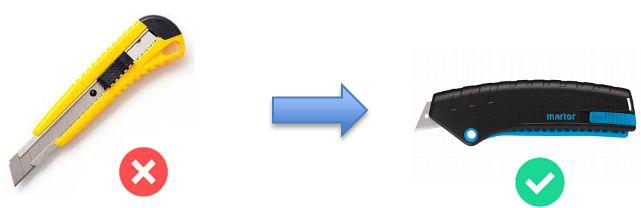
1. Start Simple: Switch to Non-Snap-Off Blades
The easiest first step is to replace standard utility bladeswhich have snap-off segmentswith solid, non-snap-off blades (available in 9mm and 18mm). These fit most standard cutters. This simple switch eliminates the risk of blade shards flying into eyes or onto products when breaking off segments.

2. Upgrade to Spring-Loaded Safety Cutters
Transition from standard knives to spring-loaded safety cutters. The blade automatically retracts the moment the slider is released. This prevents accidents caused by leaving an exposed blade on a workstation, protecting both the user and their colleagues.
3. Opt for Intelligent Auto-Retraction
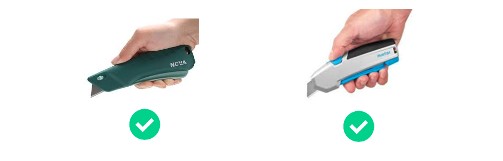
Choose safety cutters with an "intelligent" auto-retraction system. Even if the user continues to hold the slider, the blade retracts automatically as soon as it loses contact with the material being cut. This significantly reduces the risk of lacerations caused by blade slippage, especially when cutting heavy-duty or thick materials.
4. Use Zirconium (Ceramic) Blades
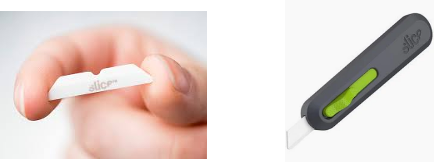
Ceramic blades are sharper and roughly 10 times more durable than standard steel blades. They reduce the frequency of blade changesthereby lowering the risk of injury during replacement. They are rust-proof, non-conductive, and ideal for cutting cardboard, foam, rubber, and food-grade applications.
5. Utilize Concealed Blade Cutters
For maximum safety, use cutters with concealed blades. Because the blade is hidden within the handle, it is physically impossible to make direct contact with the sharp edge, providing the safest cutting solution possible.

Following these simple steps will effectively minimize risks and create a safer working environment for everyone.